
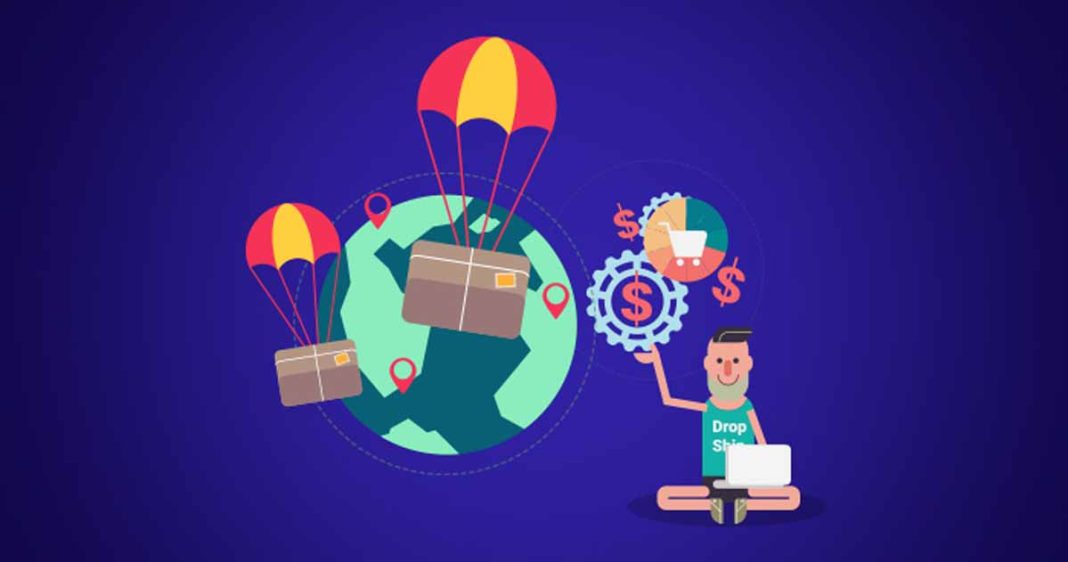
Operating a dropshipping business manually in the current competitive landscape can severely limit scale, speed, and profitability.
As with most things in business, there’s an evolution towards automation and optimization.
The traditional model of dropshipping is quickly becoming obsolete and simply listing items and managing orders will not work. Despite the existence of automation tools to assist with order processing and product listing, many dropshippers are still hesitant to use automation software.
This often stems from a perception that it is an additional, and unnecessary cost. Operating without software is now a huge strategic disadvantage.
For Modern Businesses, Automation is Now a Necessity
The allure of dropshipping was its ease of access. Entrepreneurs curated products from suppliers, marketed them, and fulfilled orders when sales were made.
A paradigm shift occurred within the last few years creating tools like Shopify and WooCommerce that host millions of participating dropshipping stores.
The massive growth comes with increased competition. Speed, efficiency, and data-driven strategy are the new differentiators between a profitable and unsuccessful business.
As noted in a Shopify merchant survey for 2024, an astounding 72% of successful dropshippers credit their profitably to automation tools.
Businesses that relied on manual processes, on the other hand, had much higher operational costs because of inefficient processes and much lower profit margins.
Time Management: The Key Metric for Profitability
Managing time is essential while scaling any business, more so for dropshipping. Without the backing of proper software systems, dropshippers spend an inordinate amount of time on order entry, inventory management, and pricing updates.
Checking to ensure suppliers’ inventory is up-to-date and adjusting store listings to prevent out-of-stock sales can take hours on a daily basis. Time that could otherwise be better spent on marketing and customer service.
Popular automation tools such as DSers, AutoDS, or Easync that work with AliExpress are capable of updating inventory, pricing, and order forwarding in seconds rather than hours.
According to industry benchmarks, these tools provide operational time savings of as much as 80%, allowing sellers to shift their focus from logistics to strategies that drive growth.
Human Error is Costly and Avoidable
Human error is another problem with manual dropshipping. Errors in transcribing a customer address, tracking information, or even updates sent about shipment progress can severely harm brand perception and result in expensive chargebacks.
As Chargebacks911 reported, U.S. e-commerce merchants lost roughly $5.8 billion in 2024 because of avoidable manual processing errors and subsequent disputes with customers.
Automation software virtually eliminates these manual errors by automatically pulling customer information from the storefront, ensuring its accuracy, and updating clients with shipping notifications automatically.
The benefits extend beyond operational efficiency to improved customer trust and repeat business, which lowers chargebacks.
Data-Driven Decision Making is the Norm
Operational logistics are no longer the sole aspect of successful dropshipping; data analytics are now equally important. Retailers who leverage analytics to compile and study product trends alongside pricing changes, as well as customer preferences, gain a substantial competitive edge.
The process of compiling and interpreting data manually is tedious and susceptible to inaccuracies.
Contemporary software solutions incorporate analytics dashboards that detect lucrative products, track competitor pricing, and recommend price adjustments in real-time.
Sell The Trend and Ecomhunt, which are integrated with dropshipping apps, utilize machine learning to identify trending products ahead of competitors. Predictive capabilities alone can increase profit margins by 40%, based on Sell The Trend’s internal 2024 data.
Scaling Without Software? Nearly Impossible
The most compelling case for automation software is scalability. In the absence of automated systems, every additional sale increases the workload.
During slower sales periods, manual processes may be manageable. However, with growth, the logistics become unsustainable without automation.
Case studies published by Oberlo before its acquisition by Shopify illustrated that dropshipping stores which adopted automation significantly scaled faster—often quadrupling
revenues in the first six months of adopting automated solutions. Without automation, stores tend to plateau quickly as manual systems become overwhelmed with daily tasks.
Integration and Future-Proofing
In the future, automated integrations will be preferred in e-commerce platforms and marketplaces.
Amazon and eBay, for example, offer APIs that permitem sellers to integrate inventory and order management software, and they frequently update these APIs.
Sellers who strive to automagically manage their businesses find themselves coping with constant interruptions and inconsistencies as these marketplaces change.
Additionally, integration with payment processors is seen as automation of payment processing as a fulfillment of professionalism and trust.
According to merchant support documents, Stripe and PayPal have reduced specific restrictions on accounts that are not using automated fulfillment software, thus making it easier to automate order processing.
Conclusion: Manual Dropshipping Isn’t Sustainable
The verdict is in. Attempts to thrive in dropshipping without automation software is insufficient not only from an efficiency perspective, but also strategically crippling.
The so-called saving from avoiding automation quickly translate to sufficed lost revenues from an inability to effectively manage scale, increased operational errors, and diminished competitiveness.
The year 2025 and beyond are no longer about whether or not to adopt software, but rather how soon.
For a business that wants to stand out in the highly competitive e-commerce industry, automation is not an option, but rather a building block.

